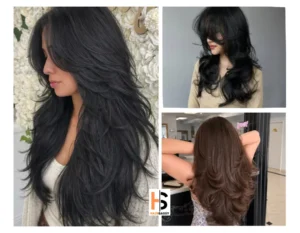
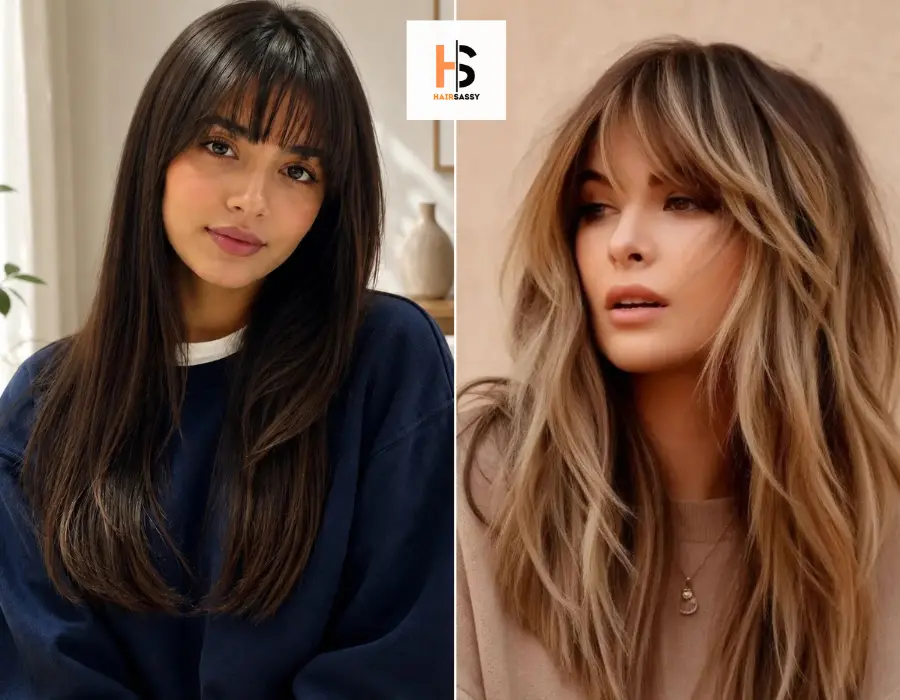
Straight hair has a way of showing off every detail of a haircut, which is why long curtain bangs straight styles keep showing up on so many wish lists this year. The bangs frame your face, but the rest of your hair stays long and smooth, so the whole look feels soft instead of choppy. That balance is hard to get wrong. Curtain bangs long hair pairs well with almost any face shape, from round to square to oval. Some women add layers, and layered hair with curtain bangs gives the ends a bit more movement without losing length. Others keep it simple with one clean line across the forehead. Growing them out is easier too, since the sides can just blend into your regular length. Below are fifteen ways to wear this style, sorted by texture, length, and face shape, so you can find the version that actually fits your hair before you sit down in the chair.
1. Layered Curtain Bangs
 Image Source: _edwardsandco
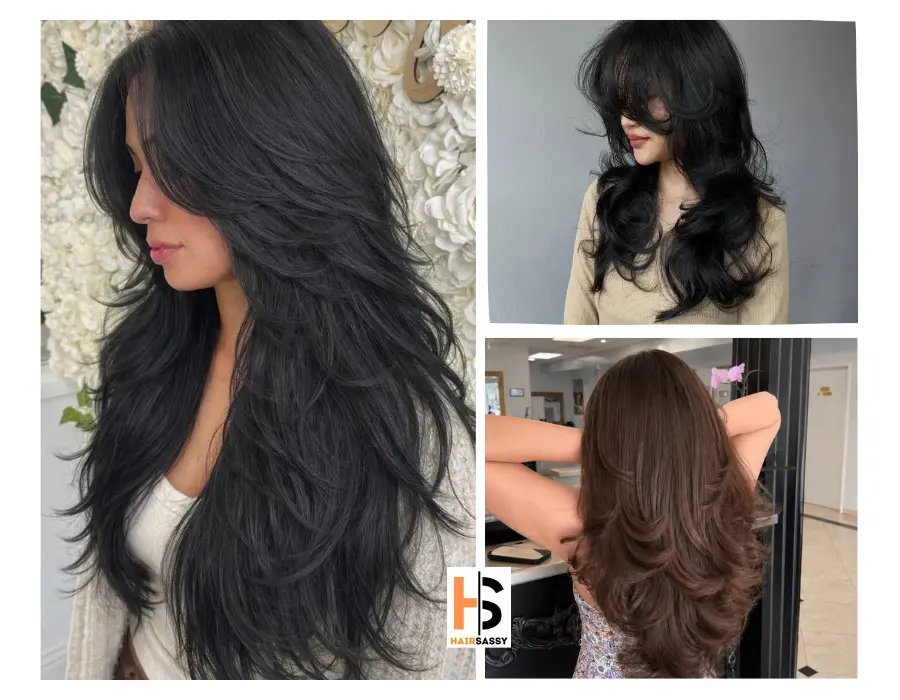
Layered curtain bangs give this whole look its shape. The bangs part right down the middle and sweep out to each side, framing the face without covering it. Underneath, the rest of the hair falls in loose, choppy layers that end around collarbone length. It’s dark brown, almost black, with a few lighter strands catching the light near the crown. Straight strands, but not flat ironed stiff. There’s a natural bend to it, especially toward the ends, which keeps the whole thing from looking too polished. The layering adds real movement around the jaw and shoulders instead of one heavy blunt line. This cut works well on fine or medium hair since the layers add the illusion of extra volume. A round brush and a bit of blow-dry tension is really all it takes to get those bangs to curve just right.
2. Blunt Cut Fringe
 Image Source: blunt_bangs
This blunt cut fringe sits straight across the forehead, ending right above the eyebrows with barely any gap in between. Full and dense, it’s cut with a clean, even line and no wispy pieces breaking up the edge. Behind it, the hair falls long, past the chest, in soft waves that loosen up the farther they get from the roots. It’s a deep brown with some lighter, warmer strands mixed through, especially near the face. No middle part here, since the fringe covers the whole forehead edge to edge. That fullness gives it a bold, statement kind of feel next to the loose waves underneath. Thick, coarse hair holds this shape best, since fine hair can make a blunt fringe look thin or patchy. A trim every few weeks keeps the line looking sharp instead of growing out uneven.
3. Face Framing Fringe
 Image Source: Suziegrierson
This face framing fringe splits softly at the center and sweeps out toward each temple, leaving the middle of the forehead just barely covered. The bangs are long enough to blend right into the layers around the cheeks, so there’s no hard line where they stop. Hair color here is a warm light brown, with soft, sun-kissed pieces mixed through that catch the light near the front. Below the bangs, the length falls just past the shoulders in loose layers with a slight outward flick at the ends. Straight strands, but not stiff. Everything moves. The face-framing pieces do a lot of the work here, drawing attention toward the eyes and cheekbones instead of hiding them. This style suits people who want the softness of curtain bangs without cutting a full fringe, since the sides can grow out into it easily. A round brush helps set that outward curve at the ends.
4. Soft Wispy Bangs
 Image Source: societywestsalon
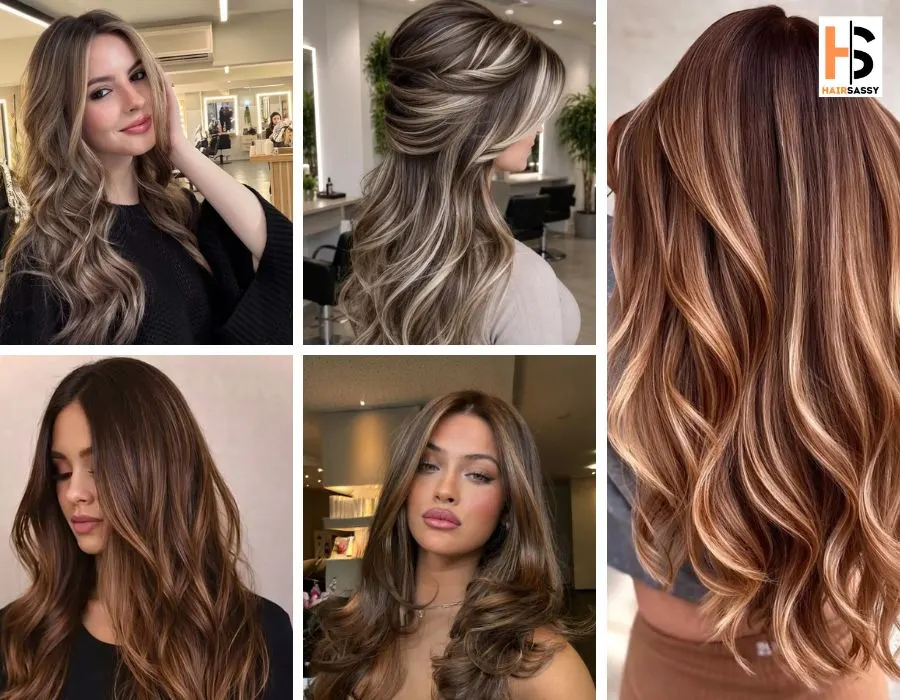
These soft wispy bangs are thin and feathered, with a lot of space between the strands instead of one solid, thick block. They sit just above the eyebrows and part slightly off center, clipped back here on each side, though they’d fall loosely over the forehead if left down. The rest of the hair is long, reaching past the chest, and styled in loose waves that get looser toward the ends. Color is a warm brown at the roots that fades into caramel and honey tones lower down. Light catches those warmer pieces around the face especially well. Wispy bangs like these work great on fine hair, since thin strands don’t need to be cut thick to look full. They’re also more forgiving day to day. A little texture spray at the roots keeps them from going flat by midafternoon.
5. Shoulder Length Curtain Bangs
 Image Source: geesalonspa
These shoulder length curtain bangs stop right around the collarbone, ending in soft, flicked-out layers at the tips. Dark, nearly black hair holds a lot of shine here, especially under warm indoor light. The bangs sweep to one side from a deep part, staying long enough to tuck behind the ear if she wanted. Straight and sleek near the crown, the layers pick up a slight outward curve lower down, adding shape without any real curl. Face-framing pieces run down along the cheeks, blending right into the shorter layers underneath. Nothing about it looks stiff. Shoulder length like this tends to suit thicker hair well, since the weight keeps those flicked ends from looking too wispy or thin. Blow-drying with a round brush at the ends is usually enough to get that same soft flip.
6. Shaggy Straight Layers
 Image Source: shirleythornhillhaircoach
Shaggy straight layers get their choppy shape from lots of short, angled cuts stacked through the length, giving the whole thing a full, undone kind of texture. The bangs are heavy and piece-y, falling just above the brow and swept slightly to one side. This hair isn’t pin straight. It has a loose, tousled bend running through it, probably from a curling iron or just natural texture left alone. Color goes from a deeper brown near the roots into warm caramel and blonde pieces lower down, especially through the front strands. Layers this short near the crown add a lot of lift and movement instead of weight. Shaggy cuts like this work especially well on hair that’s naturally a bit wavy or textured already, since the layers only add to that movement instead of fighting it. A texturizing spray brings out the same tousled finish.
7. Deep Side Part
A deep side part sends most of the hair sweeping to one side here, with one long piece dropping down over the cheek and nearly covering half the face. It’s a dark, glossy brown with a smooth shine right at the crown before the ends pick up big, bouncy curls. The length falls well past the chest, and those curls get fuller and rounder the closer they get to the tips. This isn’t a straight style through and through. It sits somewhere between curtain bangs and a full sweep, since almost all the hair gets pulled toward one side instead of splitting evenly down the middle. That deep part adds drama fast without needing much extra styling. Thick, heavy hair holds a part this deep the best, since finer strands tend to slide back toward center. A curling wand on the lower half is what gives those big curls their shape.
8. Minimalist Bang Look

This minimalist bang look keeps things simple: one straight, even fringe cut just above the eyebrows, with no layering or texturizing breaking it up. The hair is dark brown, almost black, and stays pin straight all the way down past the chest. No visible part splits the top, since the bangs run in one solid piece across the forehead. Below that, the length just falls flat and smooth with barely any movement or flick at the ends. It’s a clean, no-fuss shape from root to tip. Straight hair like this holds a blunt little fringe well, since there’s no natural wave to fight against the line. If you want low-maintenance styling, this is about as simple as bangs get. A flat iron on the bangs alone, every so often, keeps that straight line looking crisp.
9. Braided Bang Style

Braided bang style takes a section of hair right along the hairline and works it into two tight French braids that sweep back from the part on each side. Everything else pulls back into those braids, leaving just a soft, blunt fringe hanging loose over the forehead. Hair color is a deep burgundy red, almost wine-toned, with the shine really showing along the braided sections. In one photo you can see the fringe hanging straight and even, brushing just above the lashes. Straight hair braids up smooth like this, with no flyaways breaking the pattern. It’s a nice way to get bangs out of your face for a few days without cutting or clipping anything. Braids like these hold well on longer hair since there’s enough length to tuck the ends away neatly. A little gel along the part keeps frizz from creeping in.
10. Bangs pinned back
 Image Source: mustafaserdarbekereci_
Pin back bangs get clipped up and away from the face here, using two small clips set just behind the hairline on each side. The bangs themselves are thin and wispy, parted slightly off center, and would fall loosely over the forehead if let down. Long waves fall past the shoulders underneath, going from a warm brown at the roots into lighter caramel tones toward the ends. Clipping the bangs back like this shows off more of the face while keeping that soft, piece-y shape ready to drop back down anytime. It’s a quick trick, not a full restyle. This works especially well for growing out bangs, since pinning them back keeps the awkward in-between stage out of your eyes. Small metal clips do the job without leaving much of a crease once removed.
11. Air Dried Curtain Bangs

These air dried curtain bangs part in the middle and fall loosely to each side, with soft, uneven pieces instead of one crisp, blow-dried line. Long layers run the whole length of the hair, ending well past the chest, and they get choppier and more textured toward the tips. Color is a warm chestnut brown that lightens into golden and honey tones lower down, especially through the layers near the shoulders. Nothing about this looks stiff or set in place. The bangs sit at slightly different lengths, drifting toward the temples instead of staying perfectly even. That relaxed, piece-y finish is the whole point here. Air drying naturally suits wavy or slightly textured hair best, since it lets the bend of the hair do most of the shaping. A light curl cream scrunched through damp hair helps keep frizz down while it dries.
12. Messy Bun and Curtain Bangs
 Image Source: vedatyildirimhair
A messy bun and curtain bangs together make an easy pairing, since the bangs stay down and soft while the rest of the hair twists up and out of the way. The bun sits high, with loose, twisted sections instead of one smooth wrap, and a few pieces slip free near the crown. Bangs part slightly off center, falling just above the brow in feathered strands that thin out toward the ends. A couple of loose pieces hang near the ears and jaw, softening the whole updo. Hair color is a deep brown with a light wave showing through the visible sections near the bun. This kind of pairing suits thicker hair well, since it holds a twisted bun without needing extra pins. Twisting the hair while still slightly damp helps it hold shape longer.
How to Tell If Curtain Bangs Will Work for Your Face Shape
Curtain bangs are one of the more flexible fringe styles out there, but the length and part still matter a lot depending on your face shape. Here’s a quick way to figure out what to ask for.
Round faces
Ask for the part to sit a little higher, with the bangs falling long enough to graze the cheekbones. That extra length adds some visual height and keeps the style from widening the face further.
Square faces
Soft, wispy pieces work best here. Have your stylist keep the ends light and uneven rather than one thick blunt line, since a heavy fringe can make a strong jawline look even more angular.
Oval faces
This shape can handle almost any curtain bang length or thickness. Go a little shorter for a fresher look, or longer if you want something more low-maintenance.
Heart-shaped faces
Ask for the bangs to stay full near the forehead and taper out toward the temples. This balances a wider forehead against a narrower chin without cutting too close to the eyebrows.
One thing that helps across every face shape: bring a photo, but also let your stylist look at your natural part and hairline before cutting. Curtain bangs are built around your part, so a mismatch there is usually why a fringe doesn’t sit right.