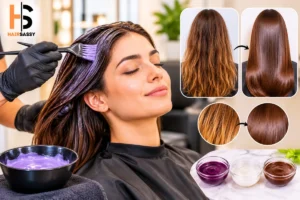
A hair gloss is a gentle, short-term color treatment that coats and soaks into the outer layer of your hair to make it shinier and freshen its tone. It can add a sheer tint or be clear, but it can’t make hair lighter, and it fades over a few weeks.
Maybe you spotted it on a salon menu, tucked between a blowout and a trim. Or a video on your feed showed someone’s hair rinsing out like polished glass. Either way, the question on your mind is simple: what is a hair gloss, and is it worth booking?
Below, you’ll find what a gloss does, what it can’t do, and how to tell if it suits your hair. No salon jargon, just straight answers.
What Is a Hair Gloss and How Does It Work?
Think of a gloss as a top coat for your hair. It adds color and shine, but it never takes anything away.
Stylists call this deposit-only color. That just means it puts pigment in and doesn’t lift any out. Your hair can get deeper, warmer, cooler or shinier, but it can’t get lighter.
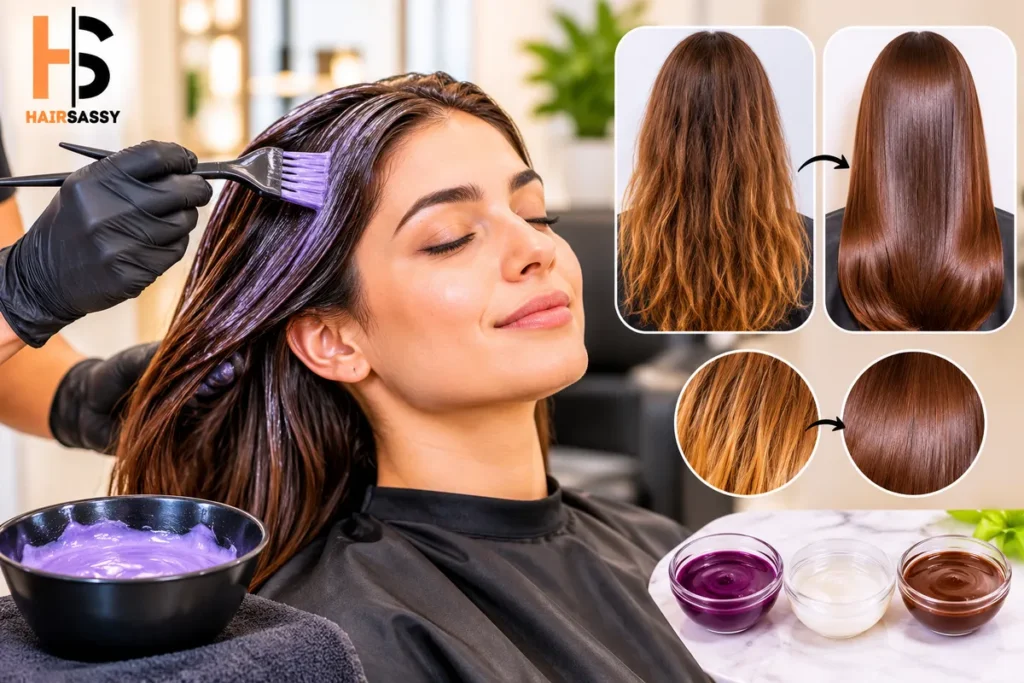
During a hair gloss treatment, four things happen:
- The gloss goes onto clean hair and coats each strand from root to tip.
- Pigment settles in and around the cuticle, the thin outer layer that protects each hair.
- The cuticle lies flatter and smoother, a bit like shingles pressed down on a roof.
- A smoother surface bounces light back more evenly, so your hair looks shinier.
Rough, lifted cuticles scatter light, which reads as dull. Flat ones act more like a mirror.
Because the color stays near the surface, it washes out little by little. It doesn’t grow out the way permanent dye does, so you won’t see a hard line at your roots as it fades.
So what is a hair gloss made of? It depends, because formulas vary between salons and brands. Before you book, ask your stylist what product they use and what it’s meant to do.
What a Gloss Does for Your Hair (and Who Notices It Most)
Hair gloss benefits depend a lot on where your hair starts. The same service can look subtle on one person and striking on another. Find yourself in the list below.
- If you have faded color-treated hair, a gloss can bring back the richness you had when you first left the salon. Reds look red again, and brunettes get their depth back. That’s why hair gloss for color-treated hair is such a popular in-between appointment.
- If you have brassy highlights or blonde hair, a gloss can tone down the orange or yellow that creeps in. Sun, hard water and hot tools pull warmth to the surface, and a tinted gloss nudges it back toward the shade you asked for.
- If you have dull natural hair, a clear gloss can add shine without changing your color at all. Think of it as hair gloss for shiny hair with nothing else attached.
- If you have early grays, a gloss can blend and soften them so they look more like soft highlights. It won’t hide them completely, but it can make them less noticeable.
- If you’re nervous about color, a gloss can be a low-pressure first step. You can try a warmer or cooler tone without a big commitment, and it fades gently with no regrowth line.
Clear Gloss, Tinted Gloss or At-Home Gloss?
There’s more than one kind of gloss, and the right one depends on your goal. A clear hair gloss is all about shine. A tinted professional hair gloss adds shine plus a color tweak, mixed by a stylist to suit your hair.
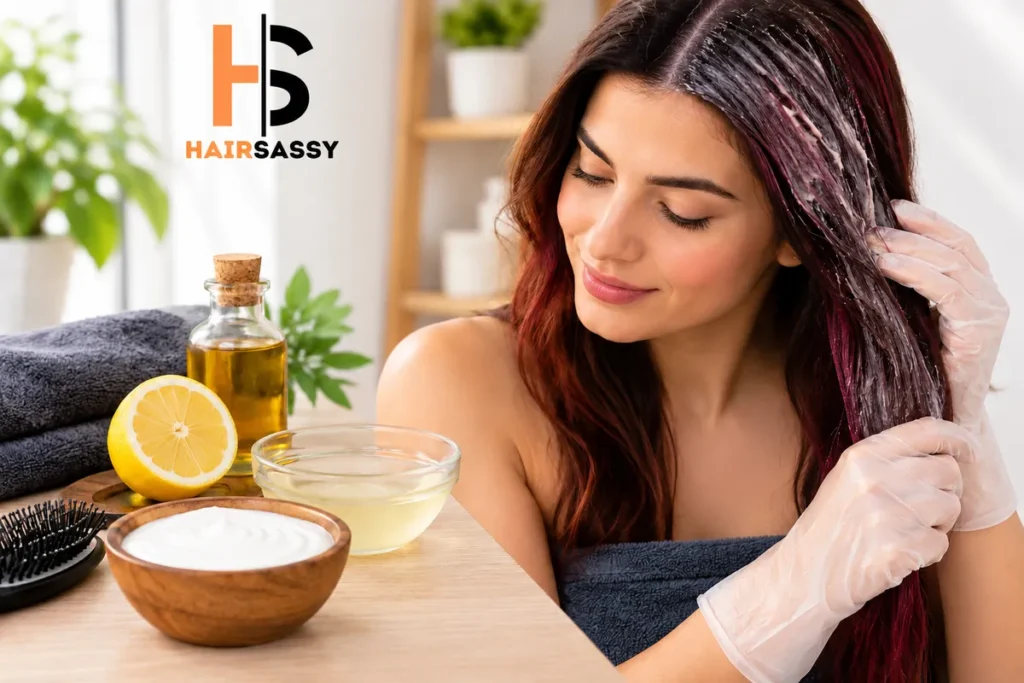
Then there’s the at-home hair gloss treatment, which covers a wide range of products. Some are simple rinses with no pigment at all. Others are tinted masks that leave a little color behind.
| Option | Shine | Tone change | Customization | Best for |
| Clear gloss | Yes | None | Little needed | Natural or colored hair you already love |
| Tinted salon gloss | Yes | Yes, refresh or correct | High, mixed for your hair | Faded color, brassiness, gray blending |
| At-home gloss | Yes | None to slight, by product | Low, made for broad shade ranges | Quick shine boosts and light upkeep |
Salon versions win on precision, since a stylist mixes a shade just for you.
At-home products are handy for quick touch-ups, but they’re built to suit lots of people at once. That makes them less tailored. If your color is tricky or you want a very specific tone, the salon is the safer bet.
What a Gloss Can’t Fix
A gloss can’t make your hair lighter. It only adds pigment, so if you want to go from brown to caramel, you’ll need a lightening service instead.
It isn’t a repair treatment either. Your hair may feel smoother after a gloss, but split ends and breakage are still there underneath. A trim and good repair care are what actually help damaged hair.
It won’t fully cover gray. A gloss can soften and blend grays, but if you want them gone, permanent color does that job.
It won’t fix patchy bleach on its own. If your highlights came out spotty or banded, a gloss can even out the tone a little. It can’t change where the lightness landed, and that usually calls for a color correction plan.
It may also take unevenly on very porous hair. Porous hair has gaps in its outer layer, often from bleach or heat. It soaks up color fast and lets go of it fast, so some spots may grab more tone than others.
Gloss vs Toner, Glaze and Semi-Permanent Color
Salon words blur together fast. These quick notes will help you ask the right questions.
- Toner: This word describes a job, not a type of product. Toning means canceling out unwanted shades, like brassy orange in blonde hair. A gloss is often used to do exactly that, so a gloss and a toner can be the same service.
- Glaze: Some salons use glaze and gloss to mean different things. Others treat them as twins. There’s no single rule, so ask what your salon’s version includes.
- Semi-permanent color: This also adds pigment without lightening, and some glosses fall into this group. Others don’t. If the label matters to you, ask what product is going on your hair.
- Permanent color: This is the clear contrast. Permanent color can lighten hair and fully cover gray. A gloss can’t do either.
If a menu term confuses you, just describe the result you want. Your stylist can match the right service to it.
What Happens at the Appointment and How Long It Lasts
A gloss is one of the simpler services on the menu. Most visits follow the same basic path:
- Consultation. You and your stylist talk about your goal, such as more shine, less brass or a richer shade. Mention any recent color or bleach too.
- Shampoo. Your hair is washed so the gloss can coat clean strands.
- Application. The gloss is brushed or squeezed on, usually from roots to ends.
- Processing. It sits on your hair for a short time to do its work.
- Rinse and style. The gloss is rinsed out, and your hair is dried and styled.
So, how long does hair gloss last? It’s a slow fade, not a sudden thing over weeks. How fast depends on the formula, the condition of your hair and how often you wash it.
To keep your gloss looking fresh longer:
- Use a color-safe shampoo
- Wash a little less often
- Rinse with cooler water
- Use heat protection before styling
Is a Hair Gloss Right for You?
A quick gut check can tell you if a gloss fits what you want.
Choose a gloss if:
- You want shinier, healthier-looking hair
- Your color has faded and needs a refresh
- Your highlights have turned brassy
- You’d like to soften a few grays
Choose something else if:
- You want your hair to be lighter
- You want full gray coverage
- Your hair is breaking and needs repair first
Either way, a few details help your stylist plan the right service. Share your goal, the color work you’ve had recently and how long you’d like your results to last.
FAQ
Does a gloss damage hair?
A gloss is generally gentler than permanent color because it doesn’t lighten. Every formula is different, though, so ask your stylist how theirs suits your hair.
Can I gloss hair that’s already colored?
Yes. Refreshing color-treated hair is one of the most common reasons people book a gloss.
Will a clear gloss change my color?
A clear gloss is meant to add shine, not change your shade. Your color should look the same, just glossier.
Curious whether a gloss is right for your hair? Ask your stylist about one at your next visit.